
The eight principles of health · 6 of 8
Temperance
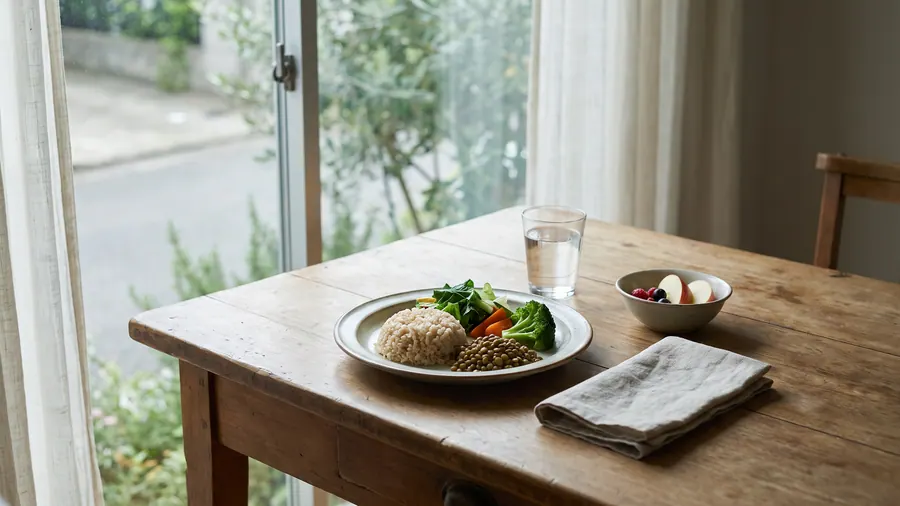
Temperance is an old word with a simple meaning: using good things in moderation, and leaving harmful things alone.
- What it is
- Enough of good things, and none of the harmful ones.
- Why it matters
- Even good things can be overdone, and some things do harm at any amount.
- Where to start
- Choose one habit to cut back, just a little.
Key verse
And every man that striveth for the mastery is temperate in all things. Now they do it to obtain a corruptible crown; but we an incorruptible.
Not too little, not too much
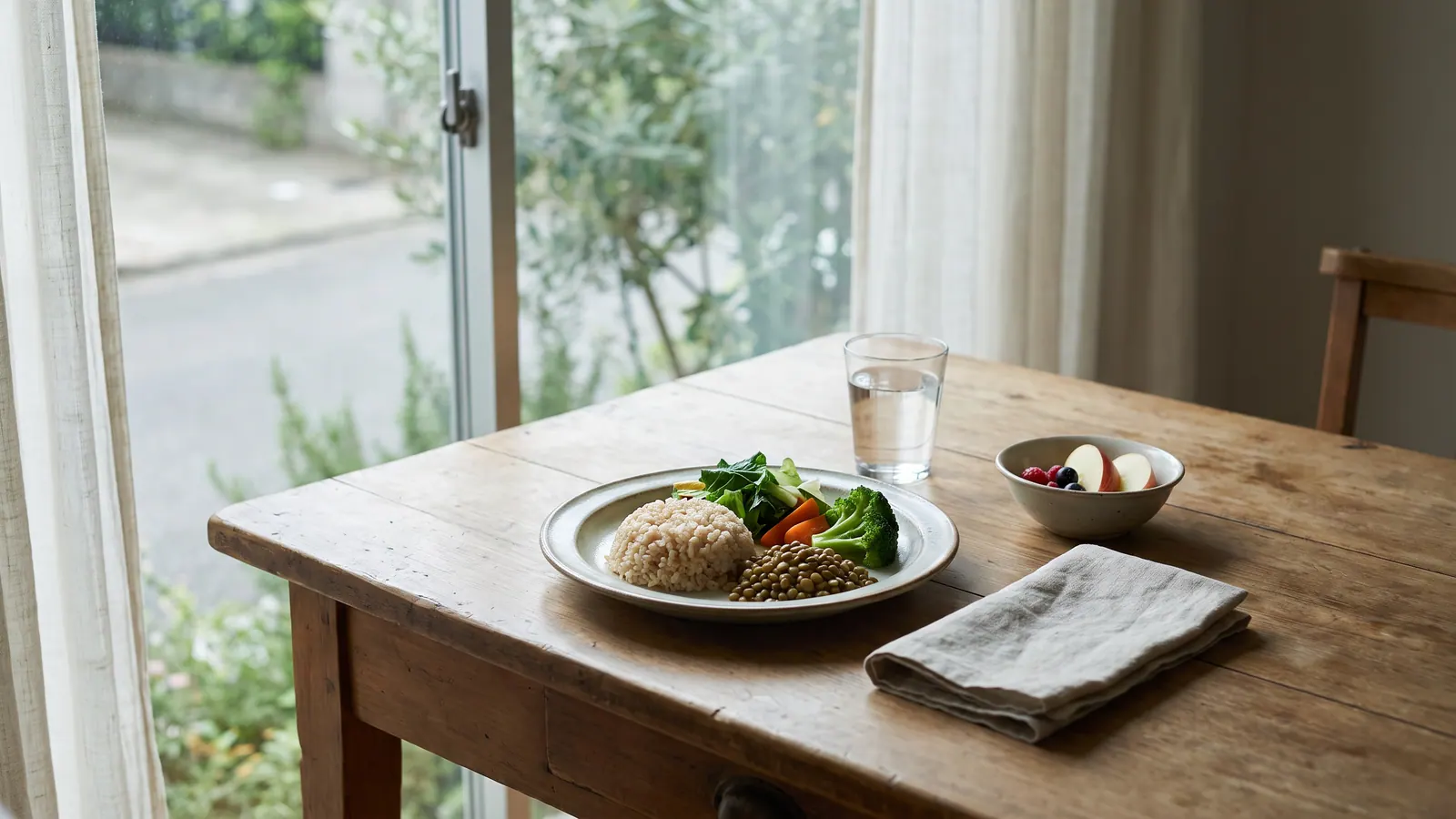
Dr Horst Müller teaches that each of our needs has a healthy range, between “too little” and “too much” (Why Do We Get Sick?, page 17). Inside that range the body works as it should. Go outside it in either direction and the body lets us know: we shiver when we are too cold and sweat when we are too warm.
So even good things, like food, work and sleep, can be overdone. Honey is good, the Bible says, but only so much of it.
“Hast thou found honey? eat so much as is sufficient for thee, lest thou be filled therewith, and vomit it.”
Proverbs 25:16 (KJV)
What temperance means
Ellen G. White put the whole idea in one sentence with two halves. Use good things wisely. Leave harmful things out altogether. In her list of the eight, she used another old word for it: abstemiousness.
“True temperance teaches us to dispense entirely with everything hurtful, and to use judiciously that which is healthful.”
“Let your moderation be known unto all men. The Lord is at hand.”
Philippians 4:5 (KJV)
Leaving harmful things alone
Some things do the body no good at any amount. Tobacco, alcohol and recreational drugs are among them, and the kindest thing you can do for yourself is to stay clear of them altogether.
If you want to stop smoking or drinking and are finding it hard, you do not have to do it alone. Your doctor can help you, and so can people who care about you.
“Wine is a mocker, strong drink is raging: and whosoever is deceived thereby is not wise.”
Proverbs 20:1 (KJV)
You can choose
A habit can feel stronger than we are, and often it is. Ellen G. White was honest about that. We cannot simply decide to feel differently. But she taught that one thing is always ours: the power to choose, and to hand that choice to God, who then gives the strength we lack.
“God has given us the power of choice; it is ours to exercise. We cannot change our hearts, we cannot control our thoughts, our impulses, our affections. We cannot make ourselves pure, fit for God’s service. But we can choose to serve God, we can give Him our will; then He will work in us to will and to do according to His good pleasure.”
“For it is God which worketh in you both to will and to do of his good pleasure.”
Philippians 2:13 (KJV)
Your body is a gift
The Bible teaches that our bodies are not ours alone. God made them and cares for them, and looking after them is a way of honouring Him.
“What? know ye not that your body is the temple of the Holy Ghost which is in you, which ye have of God, and ye are not your own? For ye are bought with a price: therefore glorify God in your body, and in your spirit, which are God's.”
1 Corinthians 6:19–20 (KJV)
Not grim, but free
Temperance is not about being joyless. Paul lists it alongside love, joy and peace as fruit that God grows in a person. It also reaches past food and drink, to work, worry, spending and screens. A good question to ask of any habit is: is this helping me, or has it started to run me?
“For intemperance is not limited to the use of intoxicating liquors; it has a broader meaning, and includes the hurtful indulgence of any appetite or passion.”
“But the fruit of the Spirit is love, joy, peace, longsuffering, gentleness, goodness, faith, Meekness, temperance: against such there is no law.”
Galatians 5:22–23 (KJV)
Something to try this week
- Pick one habit you would like to cut back, and cut it back a little.
- Leave the table before you feel overfull.
- Set a time to turn off screens in the evening, and keep to it.
- If you smoke or drink, talk with your doctor about stopping.
- Ask God for strength. Self-control is something He grows in us.
“He that is slow to anger is better than the mighty; and he that ruleth his spirit than he that taketh a city.”
Proverbs 16:32 (KJV)
These pages are general health education, not medical advice. Everyone is different, so if you have a health concern, or you are thinking about a big change, please talk with your doctor first.
Where these words come from
Every Bible verse on this page is from the King James Version, quoted word for word, so you can look each one up for yourself. The other quotations are copied exactly from these books, with the page they are on:
- Ellen G. White, The Ministry of Healing Read free in our health library
- Ellen G. White, Temperance Read free in our health library
- Dr Horst Müller, Why Do We Get Sick? Download the whole book free
Keep reading
The eight principles, in order. Choose any one to read next.