
 The Practical Life
Water Collection
Catching the Rain
Assurance & Water Security

Rain is a gift that falls freely onto your roof. Learning to catch and store it is a first step toward a more resilient home.
Try it
How fast would your tank fill?
Set your roof and a month's rain, and see how much water you could catch for the garden.
Tank
A 6 m² roof would catch about 510 litres in a month of 100 mm, filling the tank 51%. That is about 57 watering cans for the garden.
Every millimetre of rain on a square metre of roof is one litre. We assume about 85% reaches the tank; that is an example, not a measurement. The guide’s water house fills a 1,000-litre tank from its own small roof. Roof water is for the garden unless it is properly filtered and treated.
Water Collection Guide
Presented by The Law of Life Charitable Trust as part of The Practical Life, Catching the Rain teaches the value of building your own system to secure your water.
The guide below describes a small ‘water house’: a timber frame with its own roof, holding a tank that the roof fills when it rains. It needs no pump and no power. It is a good project for someone handy, and a good one to do with family or a neighbour.
Assurance and water security
What you need, and why
Four things make a water house. This is the trust’s guidance on what to look for in each; buy them wherever suits you.
A water tank
A 1,000-litre IBC (intermediate bulk container) is a robust, affordable tank that holds a lot of water in a small space. Make sure it is food-grade and find out what it held before, so you know it is clean and safe to use.
Treated timber for the frame
A full 1,000-litre tank weighs about a tonne, so the frame must be built for that load. Use timber treated for outdoor use (H3.2 in New Zealand) so the frame resists rot.
A roof sheet
A simple corrugated iron roof gives the water house its own catchment, so it collects rain even if it is not connected to your house’s gutters and downpipes.
A filter kit
A filter on the inlet keeps leaves and grit out of the tank. Water collected this way is for the garden. If you ever need it for drinking, it must be properly filtered and treated first; follow official guidance on drinking roof water, which your local council can point you to.
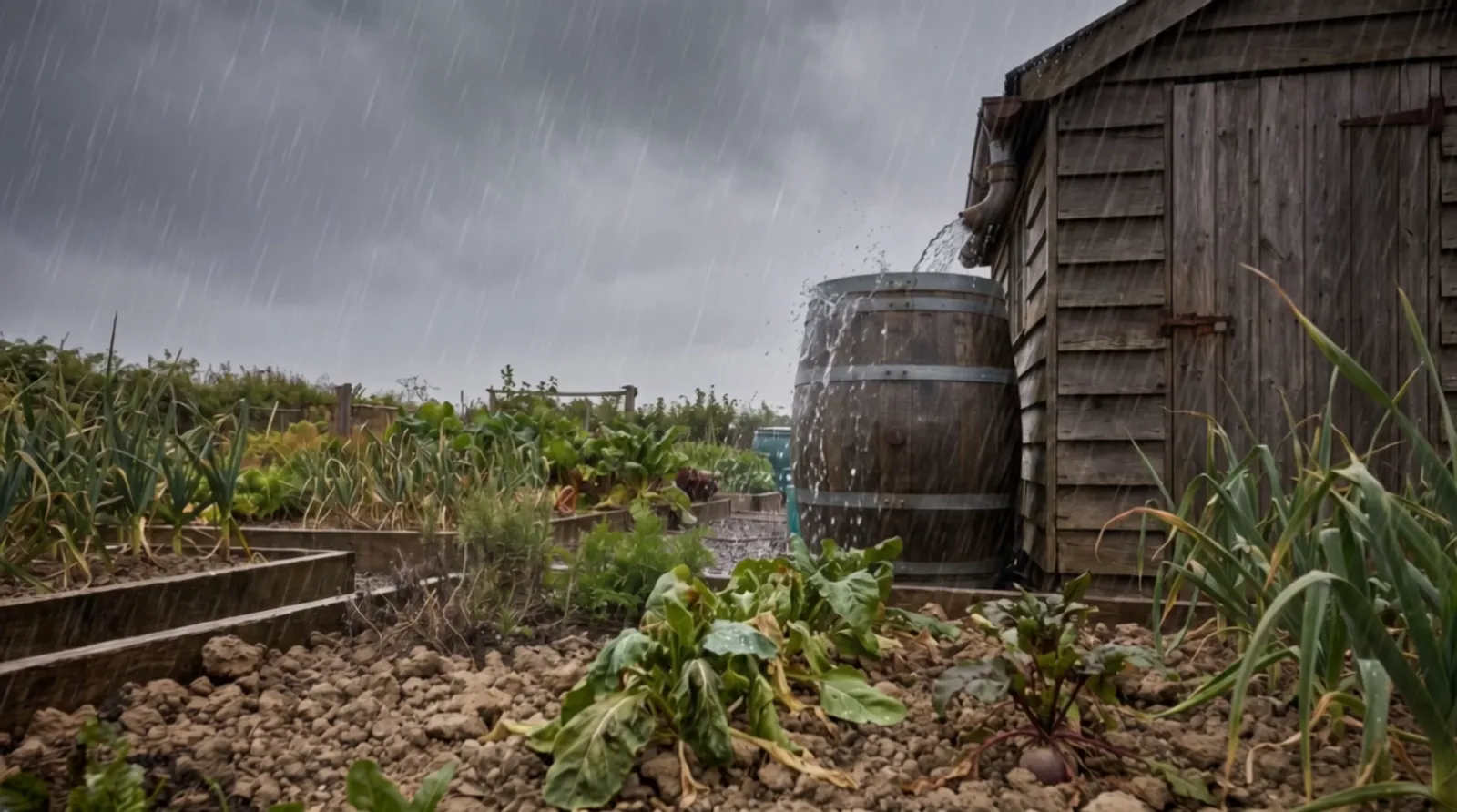
Water collection guide
Four steps: acquire, prepare the tank, frame and roof, install. Then the rain does the rest.
The water house
Building it, step by step
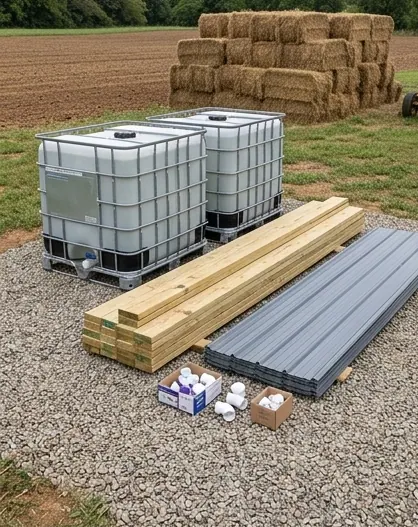
Acquire
Source a food-grade tank and standard construction timber. Making sure your parts are clean and non-toxic is the first step in water security.
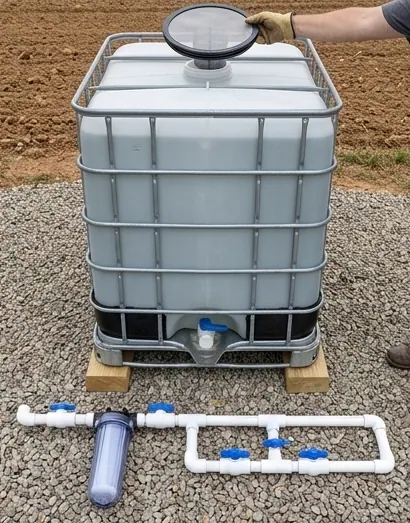
Prepare the tank
Fit your outlet tap and inlet filter while the tank is empty. This is the time to make sure every seal is watertight, before the first rain.

Frame and roof
Build a level, well-braced timber frame to lift the tank off the ground, and fix the roof sheet above it. Raising the tank lets gravity give you gentle water pressure at the tap without a pump.
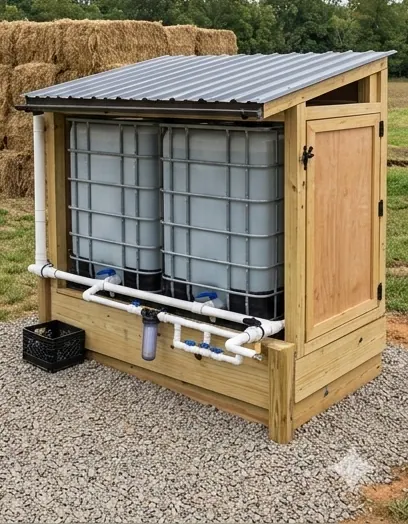
Install the tank
Set the tank securely in the frame and connect the downpipe from the roof. Your water system is now collecting, and it needs no power to run.
The pictures in these steps are illustrations from the trust’s original guide, not photographs of a finished trust project.
If you are unsure about building a stand to carry this much weight, ask someone with building experience to check it before the tank is filled, and ask your local council whether your plans need consent.
Upkeep
Looking after your system
A water house asks for very little, but a few habits keep the water clean and the frame sound.
Keep the roof and gutters clean
Clear leaves and moss from the roof sheet and gutters a few times a year, especially in autumn. Less debris going in means cleaner water and fewer blocked filters.
Keep light and insects out
Keep the tank lid closed and the inlet screened so mosquitoes cannot breed in it. A tank kept out of direct light is less likely to grow algae; many people cover a clear IBC with shade cloth or timber cladding.
Check it after storms
After heavy rain or wind, look over the frame, the roof sheet and the fittings. Fix small leaks early, before they become big ones.
Use it wisely
Water the garden from the tank in the early morning, at the base of the plants, as The Harvest describes. A full tank goes a long way when it is used with care.
“That I will give you the rain of your land in his due season, the first rain and the latter rain, that thou mayest gather in thy corn, and thy wine, and thine oil.”
Deuteronomy 11:14 (KJV)
Read alongside
The Practical Life puts the eight principles of health to work at home. These are the ones closest to this guide.
- Water
Drink water through the day, and enjoy it.
- Trust in God
The foundation: lean on God and find peace.
More from The Practical Life
 The HarvestHarvest guides for your home: what to grow, where to put your garden bed, how to build and water it, and how to make compost.Harvest
 BreathFresh breath of peaceful air: movement, rest and quiet for mind and body.Breath
 NutritionFrom the garden to the table: simple, wholesome food and a pantry that keeps.Produce
Questions about any of this?
If something here is unclear, or you would like help getting started, email us. A real person reads every message.