
 The Practical Life
Nutritional Health Collection
Nutrition
Fuelling Capability & Longevity

Self-sufficiency doesn’t end at the harvest; it continues at the table.
If the garden is where food begins, the kitchen is where it becomes a meal. Nutrition is the process of taking what you grew in the soil and turning it into good food for a long, active life. By pairing fresh, home-grown produce with simple shelf-stable staples, you can build a way of eating that serves you well and depends less on others.
“Grains, fruits, nuts, and vegetables constitute the diet chosen for us by our Creator. These foods, prepared in as simple and natural a manner as possible, are the most healthful and nourishing.”
This page is general education, not medical advice. If you have a health condition or special diet, please talk to your doctor or a dietitian.
Try it
Fill this week's plate
Choose from the guide's foods and see which of its four things to know your plate covers.
Choose what goes on the plate
This plate covers all four things the guide says to know.
- Colourful plants: on the plateKale, herbs and dark greens: plenty of vegetables and fruit every day.
- Fibre: on the plateVegetables, root crops, legumes and whole grains keep digestion regular.
- The protein bridge: on the plateLentils, chickpeas and beans, with grains and greens, make filling meals.
- Fresh from the garden: on the platePicked ripe and eaten the same day, before vitamins like C decline.
Core nutrients
Four things to know
Colourful plants
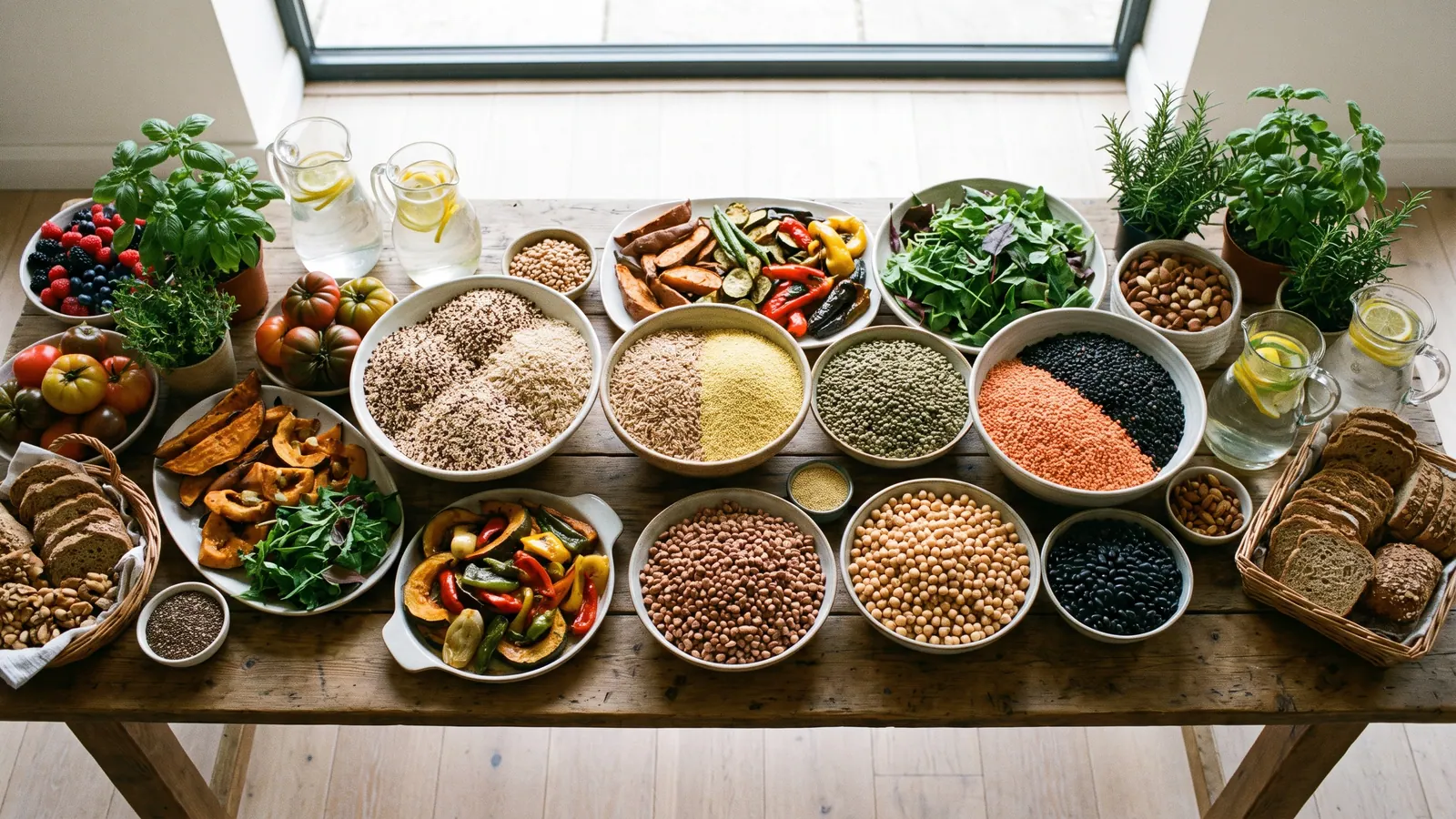
The strong, sometimes bitter flavours of kale, herbs and dark greens come from natural plant compounds. New Zealand’s healthy eating guidelines, like those in many countries, encourage plenty of vegetables and fruit every day, and a handful of greens from the garden is an easy way to add more.
Fibre
Vegetables, root crops, legumes and whole grains are good sources of fibre, which helps keep digestion regular. Leave the skins on well-scrubbed potatoes and carrots where you can.
The protein bridge
You do not need meat at every meal to get enough protein. Pantry legumes such as lentils, chickpeas and beans are rich in protein and keep for months. Served with grains and your fresh greens, they make filling, everyday meals.
Fresh from the garden
Nothing tastes quite like a tomato picked and eaten the same day. Home-grown produce can be picked ripe and eaten fresh, and some vitamins, such as vitamin C, slowly decline while produce is stored, so picking just before you cook is a good habit.
From the garden to the table
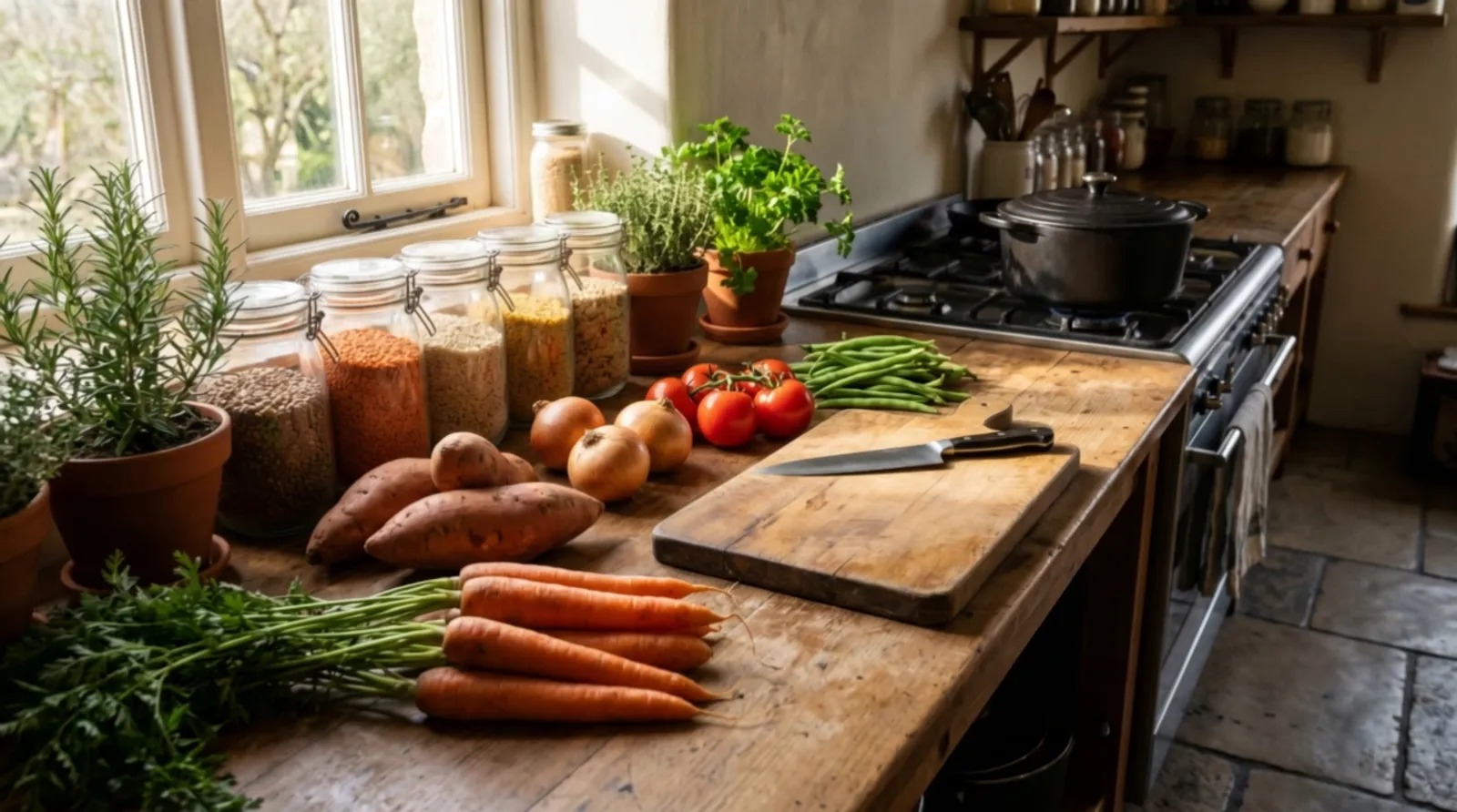
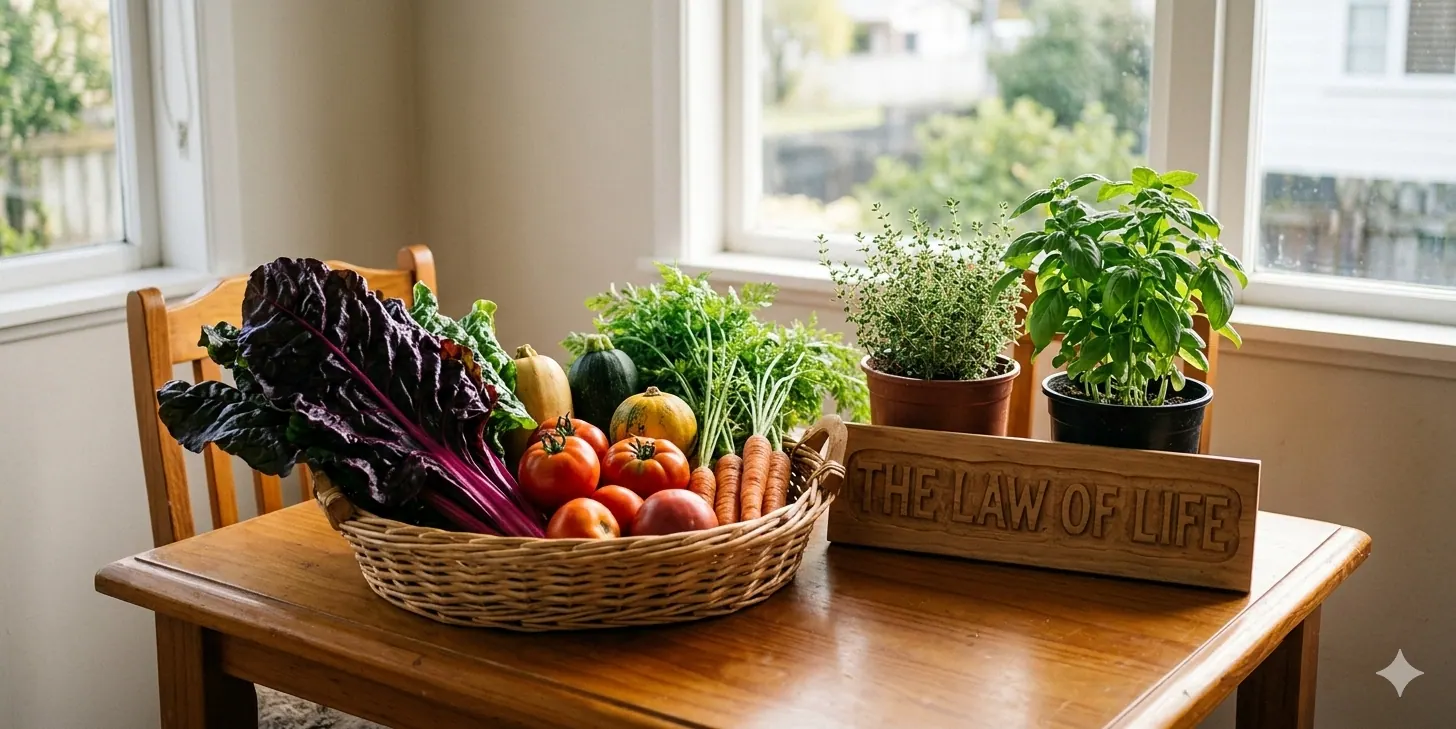
What you grew in the soil becomes a meal in a simple kitchen, with a heavy pot and a few good staples.
Kitchen hardware
Tools and habits for a self-sufficient pantry
A resilient kitchen can keep food without always relying on the power grid, and can cook a meal when the power is out. None of it needs to be new or expensive.
Four pieces of kitchen hardware
Generational cast iron
Heavy, uncoated cast-iron pans and a Dutch oven (a heavy lidded pot). Cast iron spreads heat evenly and, looked after, lasts for generations: one good pot will cook soups, stews, lentils and grains for years.
A fermentation station
Glass jars with airlock lids, or a traditional ceramic crock. Turning cabbage into sauerkraut or cucumbers into pickles keeps them for months and needs no power. Follow a tested recipe.
A way to dry food
A tiered food dehydrator, or a glass-covered solar dryer for homes off the grid. When the garden gives more than you can eat, dried tomatoes, herbs and fruit make light, shelf-stable stores for winter.
Bulk storage glassware
Large, airtight glass jars for beans, rice, oats and nuts. You can see at a glance how much you have, and your staples are kept safe from pests. Write the date on them and use the oldest first.
Habits that keep a pantry
Cool, dark storage
Pumpkins, potatoes, onions and garlic keep for weeks or months in a cool, dry, dark place with some air around them. Check them often and use any that start to soften first.
Bottling and preserving
Preserving jars let you keep a summer glut of fruit or tomatoes for the colder months. Always follow a tested recipe and its instructions exactly, because safe preserving depends on them.
A way to cook in a power cut
A camping stove or a barbecue can boil water and cook a simple meal when the power is out. Use it outdoors or with plenty of fresh air, never in a closed room.
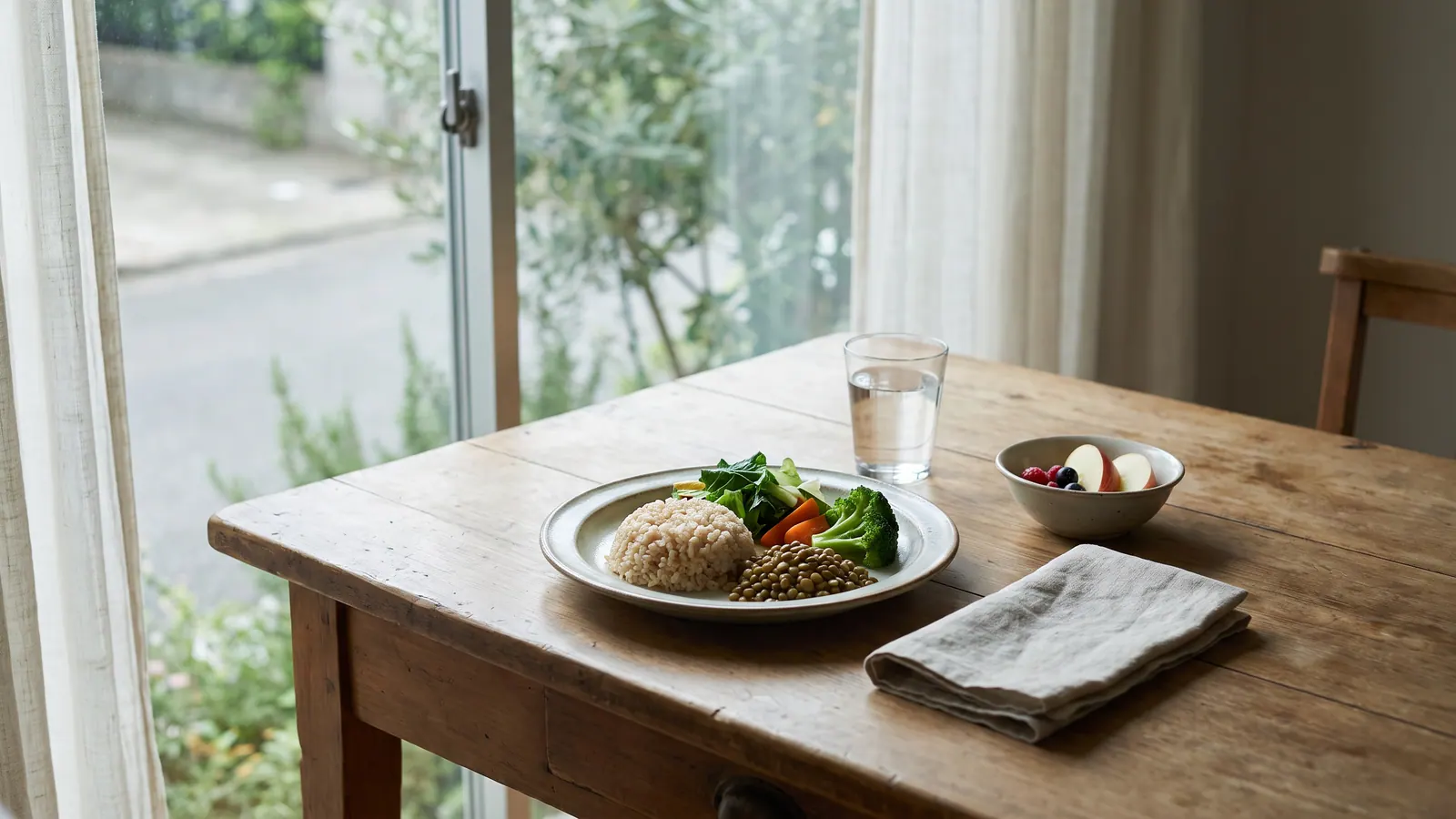
 This picture is an Illustration
This week
A simple place to start
Add a handful of something green from the garden to one meal every day. Cook one big pot of lentils or beans each week and use it in different meals. Keep a small, dated store of dry staples in the pantry.
Small, steady habits like these are the heart of good nutrition.
“And God said, Behold, I have given you every herb bearing seed, which is upon the face of all the earth, and every tree, in the which is the fruit of a tree yielding seed; to you it shall be for meat.”
Genesis 1:29 (KJV)
Read alongside
The Practical Life puts the eight principles of health to work at home. These are the ones closest to this guide.
- Nutrition
Eat plenty of plants, at regular times.
- Temperance
Enough of good things, and none of harmful ones.
- Water
Drink water through the day, and enjoy it.
More from The Practical Life
- The HarvestHarvest guides for your home: what to grow, where to put your garden bed, how to build and water it, and how to make compost.Harvest
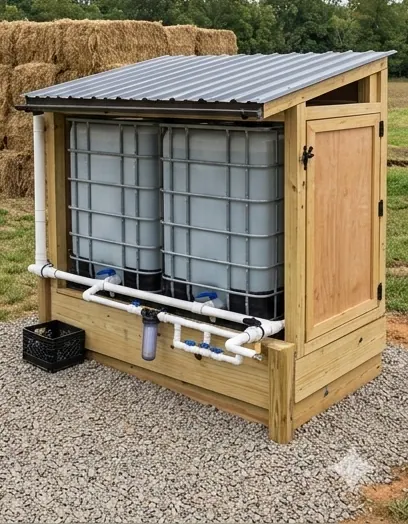 Catching the RainCollection guides for your home: how to build a simple rainwater system, a ‘water house’, for the garden.Hydrate
 BreathFresh breath of peaceful air: movement, rest and quiet for mind and body.Breath
Questions about any of this?
If something here is unclear, or you would like help getting started, email us. A real person reads every message.